MCP tool surface
StateLode keeps the tool surface small on purpose. Every extra tool adds choice, and LLMs get worse when the correct choice is hidden inside a wide menu.
task_search
Section titled “task_search”Use this first. It returns lightweight task summaries and defaults to active work.
{ "projectId": "statelode", "status": ["active", "in_progress"], "assignee": "codex", "limit": 10}Searching is truly read-only: a projectId that doesn’t exist is never created — the
unknown_project error lists the workspace’s real slugs (knownProjects) so you can pick
one and retry (see Workspaces, projects & tokens).
Add "sprint" to scope the search to a sprint: a sprint id, "active" (the
project’s active sprint), or "none" (un-sprinted backlog).
Statuses and project workflows
Section titled “Statuses and project workflows”Each project can define its own board columns, so don’t assume the labels you see in
one project exist in another. Every task_search response includes the project’s
workflow:
{ "workflow": { "version": 3, "statuses": [ { "key": "backlog", "name": "Backlog", "category": "backlog", "hidden": false }, { "key": "qa", "name": "QA", "category": "review", "hidden": false }, { "key": "done", "name": "Shipped", "category": "done", "hidden": false } ] }}keyis the stable identity. Send it asstatusto search or move. It never changes when a column is renamed. Tasks report it asworkflowStatus.nameis a display label. It is not accepted as a status.categoryis the lifecycle meaning —backlog,active,in_progress,review,doneorblocked. A task’sstatusfield is always its category, sodonemeans complete in every project.
You can keep sending a category ("status": "in_progress"): it lands in that
category’s first column, and every project always has at least one column per
category. An unknown status returns invalid_status with the project’s statuses so
you can retry with a real key.
task_get
Section titled “task_get”Use this after task_search identifies a task you need to work on. It returns
the full body, acceptance criteria, notes, blocker, dependencies, and updatedAt.
updatedAt is required for later mutations.
task_mutate
Section titled “task_mutate”Use this for creates, updates, moves, comments, and blocking. Every mutation
except create and comment must include the last updatedAt you saw.
{ "action": "move", "payload": { "id": "task_id", "status": "in_progress", "updatedAt": "2026-05-28T21:15:33.860Z", "by": "codex" }}Owner and worker
Section titled “Owner and worker”A task has two separate responsibilities. The owner is the human accountable for it (a workspace member). The worker is the agent doing it.
{ "action": "update", "payload": { "id": "task_id", "updatedAt": "…", "worker": "claude-code" }}- Claiming sets
workerand never replaces the owner."worker": nullreleases it. "owner": "teammate@example.com"changes the responsible human; it must be a member listed instatelode://workspace, otherwise you getinvalid_owner.- An unowned task you create or claim is owned by your human supervisor.
- The older single field still works:
"assignee": "<member email>"sets the owner,"assignee": "<agent name>"sets the worker. Reads keep returningassignee(the worker if there is one, else the owner’s email) alongsideownerandworker. - Filter with
"owner": "me"(your supervisor’s tasks) or"worker": "codex".
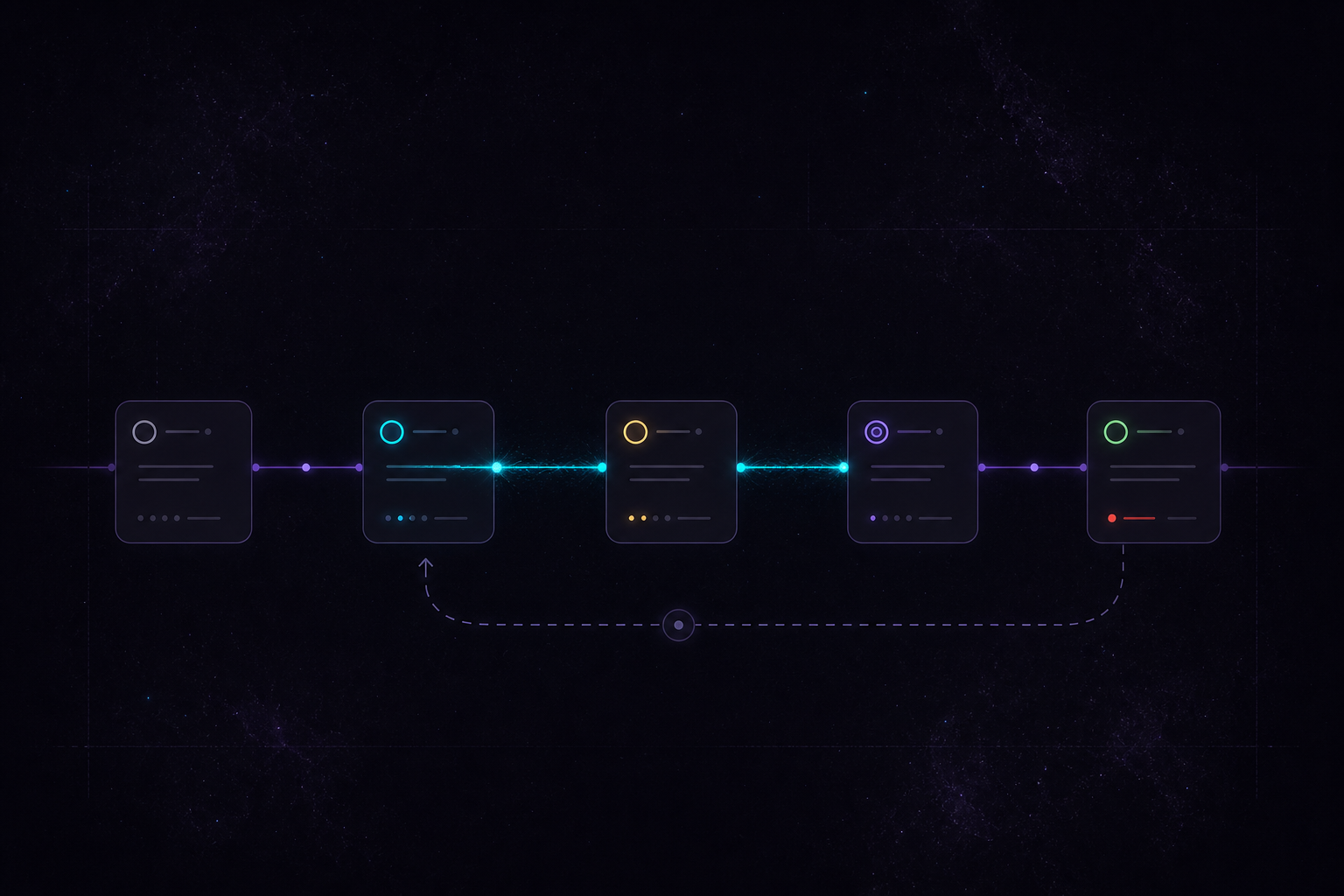
If another agent won the race, StateLode returns STALE_WRITE with the fresh task
inside the error. Retry with that fresh row. Do not guess.
Sprints
Section titled “Sprints”Sprints are managed through task_mutate too — there is no fourth tool. A sprint is
a named, goal-bearing group of tasks within one project, with a planned → active → completed lifecycle and exactly one active sprint per project.
| Action | Payload | Notes |
|---|---|---|
sprint_create |
projectId, name, goal? |
Creates a planned sprint. |
sprint_assign |
id, sprintId, updatedAt |
Puts a task in a sprint (sprintId: null removes it). Needs the task’s updatedAt — STALE_WRITE applies. |
sprint_activate |
sprintId |
Makes it the project’s active sprint. Fails if another is already active. |
sprint_complete |
sprintId |
Closes the sprint. |
{ "action": "sprint_activate", "payload": { "sprintId": "sprint_id", "by": "codex" }}The board surfaces the active sprint as a lane with a priority-ordered “what’s next” queue, and a returning human sees a “since you were away” digest of what changed.
Human-supervised agent roles
Section titled “Human-supervised agent roles”Every connected agent is a Delegate of one human workspace member. It does not become a member or impersonate that person; task history keeps both the agent credential and accountable human identity.
- Team lead Delegates coordinate plans, assignments, reviews, and project direction.
- Contributor Delegates focus on implementation and collaboration across project work.
- Observer Delegates primarily monitor context and provide analysis or feedback.
These are advisory working postures, not permission roles. They never filter task visibility
or reject an action. Workspace membership and credential scopes remain the authorization
boundary, and the capabilities list reports what the current credential can actually do.
A Team lead turns a delivery plan into StateLode state without another tool: create a
sprint with the plan’s goal, create the concrete tasks using member emails from
statelode://workspace, then attach each task with sprint_assign.
Owners and admins assign these responsibilities to human members from Dashboard → Members. All of that member’s static-token and OAuth connections inherit the current role automatically in each workspace.
Workspace discovery (a resource, not a tool)
Section titled “Workspace discovery (a resource, not a tool)”The server also exposes one MCP resource at statelode://workspace
(application/json): each granted workspace, the human Supervisor, inherited role and
capabilities, assignable human directory, and valid projects —
{ "workspace": { "id": "…", "name": "…", "slug": "…" }, "delegation": { "supervisor": { "userId": "…", "displayName": "Ada" }, "responsibilityRole": "lead", "capabilities": ["tasks:read:all", "tasks:create", "tasks:assign"] }, "members": [ { "userId": "…", "displayName": "Grace", "email": "grace@example.com", "responsibilityRole": "contributor" } ], "projects": [{ "slug": "statelode", "name": "StateLode" }]}Read it before acting: use the role as collaboration guidance, capabilities as the permission
boundary, the member email for member-linked assignment, and a listed projectId instead of
guessing one. It stays a resource so the tool count stays at three — the same reason sprints
ride on task_mutate.